
Key Takeaways
BS 5839-1:2025 places greater emphasis on the quality and accessibility of compliance evidence, not just the completion of compliance activities.
For contractors, system integrators, and service managers, two clauses are particularly significant:
- Clause 14.10 encourages more detailed information to be shared with Alarm Receiving Centres (ARCs), supporting better-informed responses to fire alarm events.
- Clause 43.3.25 introduces a documented requirement for zone verification during service visits.
- As expectations around evidence continue to increase, many organisations are looking at how digital records can help create a more consistent and accessible audit trail.
The 2025 revision of BS 5839-1 introduced several updates, but two changes have particularly important implications for fire alarm service providers.
One affects the information available when an alarm event occurs.
The other affects the evidence required when servicing and maintaining fire alarm systems.
Together, Clauses 14.10 and 43.3.25 reinforce a broader trend that many contractors are already seeing across the industry. Completing work remains essential, but organisations are increasingly expected to demonstrate that work clearly, consistently, and in a format that can be accessed when needed.
This article explores what these changes mean in practice and how contractors are adapting their processes to meet evolving expectations.
What BS 5839-1:2025 Requires
BS 5839-1:2025 is the British Standard governing the design, installation, commissioning and maintenance of fire detection and alarm systems in non-domestic premises.
While much of the standard builds on established best practice, several updates reflect the increasing importance of accountability, traceability and evidence within fire safety management.
Two clauses in particular have practical implications for contractors and service teams.
Clause 14.10 – Enhanced Signals to Alarm Receiving Centres
Historically, many Alarm Receiving Centres received relatively limited information when a fire or fault condition occurred.
Clause 14.10 recommends that, where practicable, transmitted signals provide greater context, including:
- The type of device that triggered the event
- Whether multiple devices have activated
- Relevant site information
- Additional details that may support decision-making
The intention is straightforward.
The more information available at the point an event occurs, the greater the opportunity for informed and proportionate action.
For building owners, service providers and ARCs alike, better information can support faster investigation, more accurate decision-making and improved incident management.
Clause 43.3.25 – Zone Verification and Documented Evidence
Clause 43.3.25 introduces a requirement for engineers to verify that zone identification shown on the Control and Indicating Equipment (CIE) accurately corresponds with the physical zone plan.
For service teams, this introduces two key considerations.
Zone verification must be recorded
The exercise is no longer simply a visual check carried out during a service visit.
The outcome of that check must be documented and available as evidence if requested.
Evidence must be reliable
As scrutiny around compliance evidence increases, organisations are placing greater importance on records that are accurate, traceable and accessible.
The focus is shifting away from simply recording that an activity took place and towards demonstrating how, when and by whom it was completed.
What These Changes Mean in Practice
Many contractors already carry out the activities required by these clauses.
The challenge is often not the activity itself.
The challenge is creating consistent evidence across multiple engineers, multiple sites and multiple years of service history.
For smaller portfolios, manual processes may remain manageable.
For larger estates, maintaining consistency becomes increasingly difficult.
Service records need to be completed accurately.
Evidence needs to be retrievable.
Clients need visibility.
Auditors need confidence.
And service teams need processes that are practical in the real world.
This is where many organisations are now reviewing how compliance information is captured, stored and presented.
Supporting Clause 14.10 with Improved Event Visibility
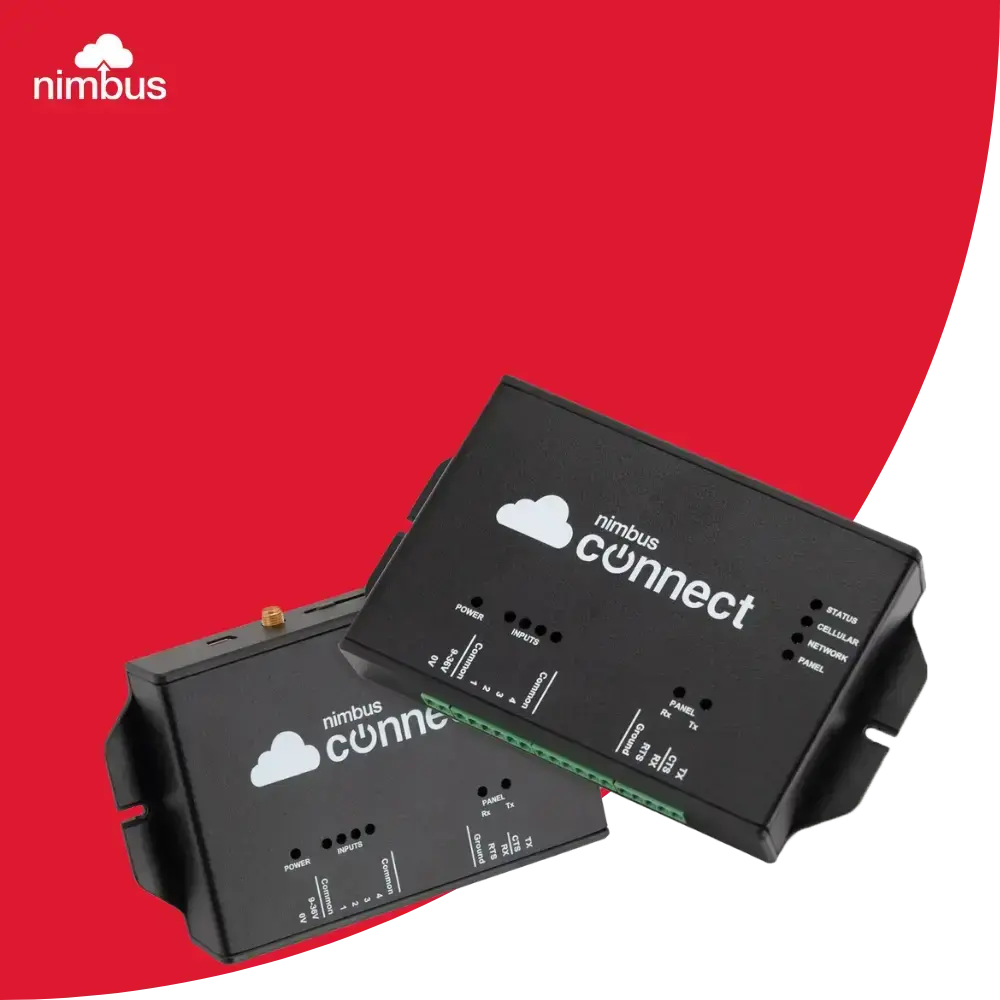
For organisations looking to provide richer information to ARCs and duty holders, solutions such as Nimbus Connect can help bridge the gap between existing fire alarm infrastructure and modern reporting expectations.
Nimbus Connect connects to compatible fire alarm control panels and provides detailed event information in real time.
Rather than simply identifying that a fire or fault has occurred, additional information such as panel, loop, zone, address and device data can be made available to relevant stakeholders.
What Nimbus Connect Transmits
|
Signal Type |
Legacy System |
Nimbus Connect |
|
Event type |
Fire / Fault (generic) |
Device type, nature of activation |
|
Location detail |
Zone name only |
Panel, loop, zone, address |
|
Multiple activations |
Not indicated |
Flagged in real time |
|
Site context |
None |
Configurable (e.g. sleeping accommodation) |
|
Delivery method |
ARC only |
ARC, email, app notification |
For building managers and service providers, the benefit is not simply additional data.
It is having greater context when making decisions about an event, investigating issues, or reviewing historical activity.
Importantly, this can be achieved without requiring wholesale replacement of existing fire alarm systems.
Zone Verification and Evidence Capture
Zone verification has traditionally relied on manual processes.
Many organisations still use paper records, manually completed forms or engineer-written service reports to demonstrate that checks have been completed.
These approaches can be effective, but they also rely heavily on consistency and accurate record keeping.
Common challenges include:
|
Approach |
Limitation |
|
Two-engineer verification |
Labour-intensive, costly, and still produces a manually completed record |
|
Single-engineer panel trips |
Time-consuming, prone to error, and no direct panel-event link |
|
Paper-based logs |
No tamper protection, no timestamp integrity, difficult to retrieve for audit |
|
Generic mobile forms |
Reduces paperwork but data is still manually entered, not panel-derived |
The issue is not a lack of diligence from engineers.
Rather, it is that manual processes inevitably introduce variation between people, sites and organisations.
As expectations around compliance evidence continue to evolve, many contractors are looking for ways to create a more consistent approach.
Supporting Clause 43.3.25 with nimbusGo
nimbusGo has been designed to support servicing, testing and compliance documentation by capturing information directly from compatible fire alarm control panels during service activities.
Because results are linked directly to panel events, service information is recorded as work takes place rather than reconstructed afterwards.
Non-Editable Test Records
Test records are linked to panel activity, timestamped automatically and stored digitally.
For organisations responsible for maintaining accessible compliance records, this can provide additional confidence in the integrity of the information being retained.
Zone Verification Without Repeated Panel Trips
nimbusGo allows engineers to view live panel information while moving around a building, supporting zone verification as testing takes place.
On suitable sites, this can reduce the need for repeated journeys between devices and control panels and may allow some verification activities to be completed by a single engineer.
Automatic Logging and Timestamping
Testing activity is recorded throughout the visit, helping to reduce administrative work after the engineer leaves site and ensuring service information is available more quickly.
Photo and Fault Capture
Where issues are identified, engineers can document findings immediately using photos and notes linked directly to the service record.
Client Visibility
Clients can access service information, test records and compliance documentation through a dedicated portal, providing easier access to historical records when required.
What This Means for Service Managers
For organisations responsible for multiple sites, the implications of Clause 43.3.25 extend beyond individual service visits.
The challenge is often consistency.
Consistency between engineers.
Consistency between sites.
Consistency between service visits completed months or years apart.
Many service providers are therefore looking beyond compliance alone and focusing on how evidence is captured, retained and shared.
The goal is not simply to demonstrate that work has been completed, but to ensure that evidence remains accessible, reliable and useful throughout the lifecycle of the system.
This is where digital approaches are increasingly being adopted across the industry.
Ready for BS 5839-1:2025?
BS 5839-1:2025 places greater emphasis on visibility, traceability and evidence.
For organisations reviewing how they capture compliance information, understanding the operational impact of Clauses 14.10 and 43.3.25 is an important first step.
Nimbus Connect and nimbusGo have been developed to support these requirements by helping organisations improve event visibility, streamline servicing workflows and create accessible compliance records.
Book a demo or explore the nimbusGo product page to see how these capabilities work in practice.