6 min read

nimbusGo vs Clik Software: Comparing Fire Alarm Testing and Field Service Management Tools

nimbusGo vs Clik Software: Comparing Fire Alarm Testing and Field Service Management Tools

Managing a fire maintenance business involves both commercial coordination and specialist technical work. Scheduling, engineer allocation, customer communication, testing, reporting and invoicing all need to move efficiently, but they are not necessarily best served by the same type of technology. When comparing nimbusGo and Clik Software, it is helpful to begin with the role each product was designed to perform.

The short answer: Clik Software supports business-wide processes such as job scheduling, engineer dispatch, quoting, invoicing, stock management and customer records. nimbusGo supports specialist fire alarm servicing, testing and commissioning activities, including panel interaction and automatic capture of test information.

They are not direct substitutes. For some fire maintenance businesses, the two platforms may complement one another by supporting different stages of the same service workflow.

Understanding the Role of Each Platform

The most useful comparison begins with purpose. Both tools can contribute to a more efficient service operation, but they are designed to address different requirements.

Clik helps businesses plan, administer and manage work. nimbusGo is focused on how fire alarm servicing, testing and commissioning activities are carried out and evidenced on site.

Clik Software: Field Service Management for the Whole Business

Clik is a field service management platform designed to bring operational and commercial processes into one system. Its capabilities include job scheduling, engineer dispatch, quoting, invoicing, stock management and customer communication.

The Clik Jobs mobile app gives engineers access to job information in the field, while activity such as timesheets, materials and job progress can be fed back into the wider business workflow.

For fire maintenance contractors, this can provide a strong operational foundation. Visits can be scheduled, remedial work quoted, customer records maintained and completed jobs progressed towards invoicing without relying on separate administrative processes. Clik’s primary role is managing the workflow around service delivery. It is not intended to replace specialist tools that connect directly to fire alarm control panels or capture panel and device-level testing information. That is the part of the workflow nimbusGo is designed to support.

nimbusGo: Built Specifically for Fire Alarm Servicing and Commissioning

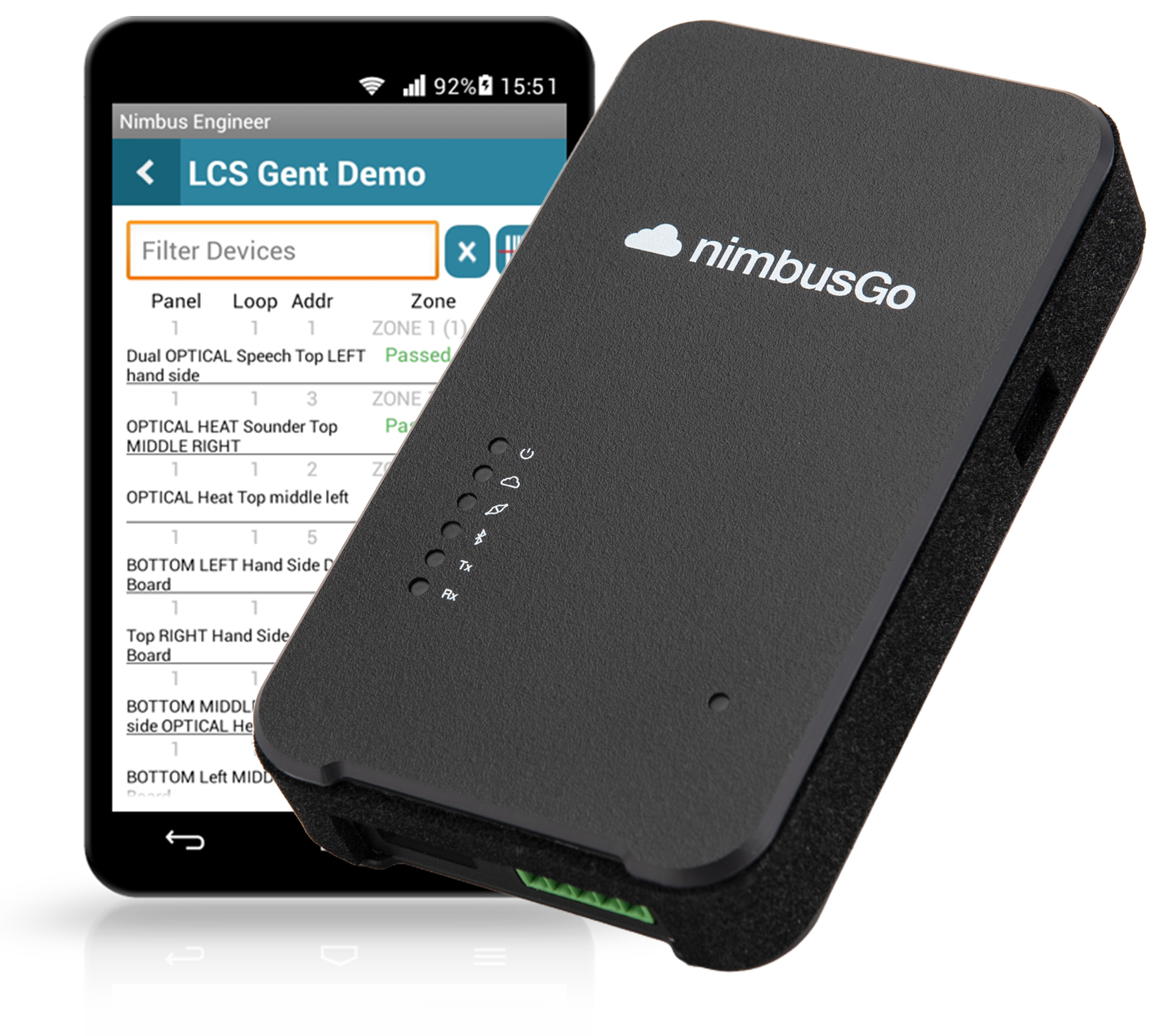
nimbusGo combines a portable device with cloud software to support fire alarm servicing, testing and commissioning. The device connects to compatible fire alarm control panels, reads live panel events and captures testing information as work is carried out. This reduces reliance on manual data entry and gives engineers access to panel information while working away from the control panel.

Fire alarm servicing involves activities that go beyond a standard field service visit. Depending on the system and scope of work, engineers may need to verify zones, test individual devices, record results and provide evidence of the work completed. nimbusGo has been developed around those specialist requirements. It complements job management software by supporting the technical work taking place during the visit, rather than replacing the wider operational processes used to schedule, manage and invoice the job.

How Each Platform Supports Efficiency

Labour efficiency is influenced by several parts of the service lifecycle. Time can be spent planning work, allocating engineers, travelling, carrying out tests, recording results, preparing reports and completing administrative tasks after a visit.

Clik and nimbusGo contribute at different points in that workflow. The comparison below outlines the primary role of each platform.

Workflow Stage

Clik Software

nimbusGo

Job scheduling and dispatch

Drag-and-drop scheduling, engineer matching

Not applicable

Quoting and invoicing

Full quote-to-invoice workflow

Automated remedial reports with part numbers and photos

On-site testing (panel interaction)

Generic job sheet / checklist

Direct panel connection, auto-logged pass/fail

Zone verification (Clause 43 compliance)

Manual process, engineer records manually

One-engineer capable; panel-driven verification

Compliance evidence

Digital job records and certificates

non-editable panel-derived records, panel-driven test data; BS 5839 Clause 43.3.25

Asset register

Site and equipment records

Instant asset creation from panel config files

Client reporting

Report generation from job data

Automated end-of-visit reports with timestamps and photos

How Clik Can Improve Efficiency

Clik helps reduce the administrative effort involved in planning, managing and completing work.

Scheduling, engineer allocation, timesheets, stock tracking, customer records, quoting and invoicing can be managed within the platform. Connecting activity from the field with back-office processes can reduce duplicate data entry and give operational teams a more consistent view of work in progress.

For organisations coordinating a high volume of jobs across multiple engineers or disciplines, these efficiencies can support better resource planning and help completed work move through to billing more effectively.

How nimbusGo Can Improve Efficiency

nimbusGo focuses on the time and processes associated with fire alarm testing, servicing and commissioning on site. By connecting to a compatible fire alarm panel, it gives an engineer access to live panel activity while they move around the building. Testing information can be captured as devices are operated, reducing manual recording and the need to make repeated journeys back to the control panel.

On some larger sites, this can support work that may otherwise involve a second engineer positioned at the panel. Whether a one-engineer approach is appropriate will depend on the site, system, scope of work, contractor procedures and relevant safety arrangements. The resulting labour benefit will therefore vary between visits. For suitable sites and workflows, reducing repeated panel checks or additional engineer involvement can make servicing more efficient without reducing the quality of the information captured.

Compliance Records and Service Evidence

Accurate and accessible records are an important part of professional fire alarm servicing. They support quality management, customer reporting and the contractor’s ability to demonstrate the work completed during a visit.

Clik and nimbusGo contribute to record-keeping in different ways.

Clik Compliance allows teams to create and manage digital forms, monitor certificate renewals and bring audit information into a structured system. This can help organisations maintain consistent documentation across a range of service and health and safety activities.

nimbusGo focuses specifically on information produced during fire alarm testing and servicing. Because it connects to compatible fire alarm panels, test activity can be captured from the system as work is completed rather than relying entirely on information entered after the event.

  • Non-editable records: Test data is captured automatically and cannot be retrospectively altered, providing unequivocal proof of what was tested.
  • BS 5839 Clause 43.3.25 compliance: nimbusGo is specifically designed to meet the requirements of this clause, which governs the verification of fire alarm systems during servicing.
  • Device-level accuracy: Every device, every zone, every visit — logged with timestamps, locations, and pass/fail status.
  • Instant client portal access: Clients receive transparent, real-time access to their service records as standard, not as an add-on.

"nimbusGo brings total transparency to fire system testing. It's a smart, scalable solution that gives us the compliance assurance our clients demand and our engineers trust." — Marlowe Fire & Security Group

For contractors working in sectors such as healthcare, education and housing, detailed service records can form an important part of the customer relationship. Providing accessible information helps clients understand what work has been completed and gives both parties a consistent record to refer to.

The Marlowe Fire & Security Group case study provides an example of how one contractor has used nimbusGo to support its approach to testing records, customer visibility and service delivery.

Implementation and Pricing: What to Expect

Functionality is only one part of a technology decision. Fire maintenance businesses also need to consider implementation, training, compatibility, cost and how a new platform will fit into existing ways of working.

Clik and nimbusGo have different implementation requirements because one is a broader field service management platform and the other combines specialist hardware with cloud software.

Clik Software

Clik is accessed through desktop software, browser-based services or mobile applications, depending on the selected products and configuration.

Implementation may include setting up customer and site records, configuring job types, creating workflows, adding engineer profiles and training office and field-based users. The platform can also connect with calendar and financial processes, subject to the products and integrations selected.

Clik does not publish standard pricing for every business configuration. Contractors should contact Clik directly to discuss their number of users, required products, implementation needs and commercial terms.

nimbusGo

nimbusGo combines a portable physical device with access to its cloud platform. Setup therefore includes device onboarding, panel connection training and configuration of the relevant software access. The Starter Package is priced at £545 and includes onboarding and training services. Platform access is £70 per month.

The nimbusGo device can be transported between sites and connected to supported fire alarm control panels. This means one unit may be used across multiple customer locations rather than being permanently installed at a single building. Compatibility varies by panel and connection method. Contractors should check the current nimbusGo connectors page or speak with the Nimbus team to confirm support for the panels within their customer estate.

For operations managers evaluating ROI: the calculation is straightforward. If a single large-site visit previously required two engineers and now requires one, the saving on that visit alone can exceed the monthly platform cost. For contractors running several large-site visits per month, the return is typically rapid — and the compliance benefits compound on top of that.

See how M&G Fire Protection reduced labour costs and improved zone plan verification after adopting nimbusGo — a practical example of what the numbers look like in practice.

Which Platform Is the Right Fit?

The answer depends on which part of the operation needs support.

Clik may be the more relevant choice for a business looking to improve scheduling, customer management, job administration, quoting, invoicing and wider field service processes.

nimbusGo may be more relevant where the priority is supporting engineers during specialist fire alarm servicing, testing and commissioning, particularly when direct panel information, device-level records and more efficient on-site workflows are required.

For some contractors, this will not be an either-or decision. A field service management platform can manage the commercial and operational lifecycle of the job, while nimbusGo supports the specialist technical activity taking place on site.

Understanding that distinction makes it easier to assess where each product could fit within the business and what value it would need to deliver.