A modern approach to fire alarm systems
Every facility or property manager recognises their core responsibility to keep people and property safe.

Managing fire safety across a property portfolio means coordinating information, people, contractors and systems across multiple buildings.
As estates grow, one of the biggest challenges is often visibility. Information can sit across fire alarm panels, maintenance reports, fire risk assessments, contractor portals and site records, making it difficult to maintain a clear picture across the portfolio.
Digital tools can help bring this information together. Rather than replacing professional expertise or existing responsibilities, they support day-to-day management by making records easier to access, improving oversight and helping teams work more consistently across multiple sites.
This guide explores six categories of fire safety technology commonly used by property managers, what role each one plays and the considerations that matter when evaluating options.
Key takeaway: The most effective approach is rarely built around a single system. Many organisations use a combination of tools covering monitoring, testing, risk assessment management, record-keeping, contractor oversight and reporting.
When evaluating fire safety technology, compliance is only one part of the equation.
The most useful solutions help organisations:
Different tools support different parts of the fire safety management process, which is why many organisations use a combination of systems rather than relying on a single platform.
The categories below are organised according to the role they commonly play within a fire safety management strategy.
For organisations managing multiple buildings, having access to reliable, up-to-date information is often one of the most valuable outcomes a technology platform can provide.
When information is held across individual sites and systems, building an accurate picture of activity across a portfolio can be time-consuming. Monitoring platforms help address this by bringing system information into a shared environment that can be accessed by authorised stakeholders.
Real-time monitoring software connects to compatible fire alarm systems and provides visibility of events, testing activity and system status across one or more buildings.
Capabilities may include:
For property managers responsible for multiple buildings, this can make information easier to access and help reduce reliance on separate systems or manual reporting processes.
|
Capability |
Why It Matters |
|
Device-level event notifications |
Provides more information about system activity and affected devices |
|
Secure cloud-based records |
Makes information easier to access and review over time |
|
Multi-panel, multi-manufacturer support |
Supports mixed estates without requiring panel replacement |
|
Guided weekly test workflows |
Supports a consistent testing process across sites |
|
Role-based access and reporting |
Helps internal teams and contractors access relevant information |
Nimbus Connect is designed to support organisations managing fire alarm systems across multiple buildings.
The platform provides access to real-time fire alarm information through a web portal and mobile app while working with a wide range of fire alarm panel manufacturers.
For organisations managing mixed estates, compatibility with existing infrastructure can be an important consideration. Nimbus Connect works alongside existing fire alarm systems rather than requiring wholesale replacement of equipment.
"The Nimbus units have vastly eliminated the need for paperwork when testing manual call points and have provided 24/7 real-time visibility of each building's fire system status."
Chesterford Research Park
Routine testing and servicing activities generate a significant proportion of a building's fire safety records.
Digital tools can help standardise testing processes, improve record quality and reduce the amount of manual administration involved in creating and managing records.
Depending on the solution, information may be entered manually, captured digitally during testing or obtained directly from compatible fire alarm systems.
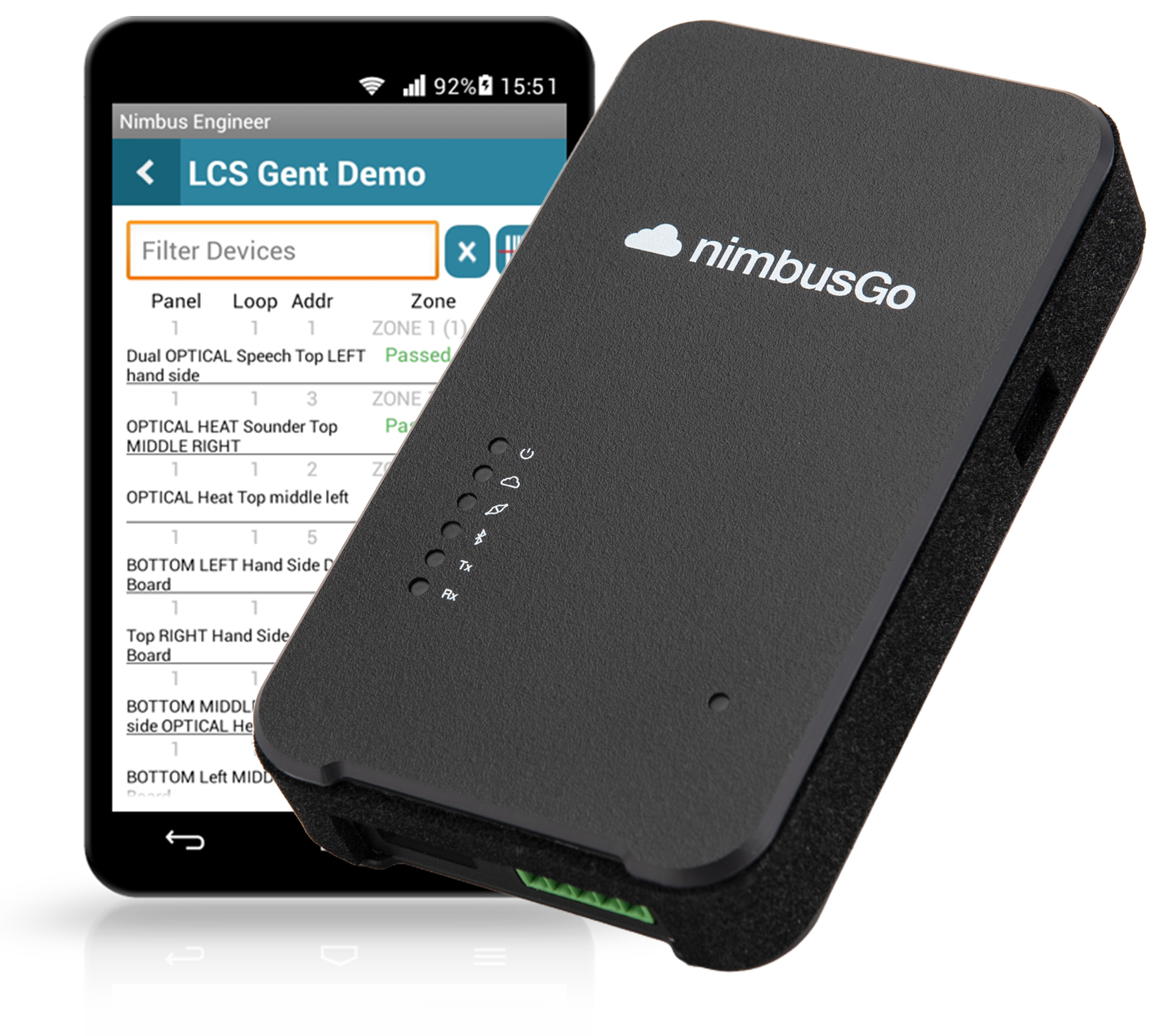
nimbusGo combines a portable device with cloud software to support fire alarm servicing, commissioning and testing.
By connecting to compatible fire alarm panels, it can capture information directly from the system during testing activities. This helps reduce manual recording and supports engineers while carrying out work on site.
The extent of any efficiency gain will vary depending on factors such as site size, testing requirements and existing working practices.
For organisations carrying out weekly testing internally, Nimbus also provides dedicated testing applications designed to support a consistent testing process and record capture.
Fire risk assessments form an important part of fire safety management and help organisations understand, prioritise and review risk within their buildings.
For organisations managing multiple sites, software can help make assessments easier to organise, review and maintain over time**.**
One of the most valuable capabilities for larger estates is visibility across multiple buildings, helping teams understand which assessments are current, which actions remain outstanding and where reviews may be required.
|
Feature |
Why It Matters |
|
Building-type assessment templates |
Supports a structured assessment process |
|
Action tracking with due dates |
Helps monitor identified actions |
|
Scheduled review reminders |
Supports regular review activity |
|
Reporting tools |
Makes information easier to share |
|
Version history |
Provides visibility of changes over time |
Fire risk assessments are most effective when they form part of an ongoing management process rather than existing as standalone documents.
Many organisations use software to help manage review schedules, track actions and maintain a structured record of assessment activity over time.
This supports consistency and makes information easier to access across a wider portfolio.
Records support many aspects of fire safety management, from maintenance planning and contractor communication to audits and internal reviews.
Digital record systems help bring information together and reduce reliance on separate paper and digital processes.
A digital fire safety logbook provides a central location for recording and accessing activities such as:
The primary benefit is creating a consistent record of activity that can be accessed when needed by relevant stakeholders.
What a Digital Logbook Should Capture
Supporting Long-Term Record Management
As digital record-keeping becomes more widely adopted, many organisations are moving away from paper-based processes and towards centralised systems that make information easier to access and manage over time.
The Nimbus Connect audit trail provides a live record of connected fire alarm activity, including events, testing records and service history, helping property managers access information without relying on manual record creation.
Many property managers work closely with maintenance providers, contractors and specialist fire safety companies.
Shared access to information can help improve communication, provide greater visibility of completed work and create a more consistent view of activity across the estate.
Contractor management platforms commonly provide:
These tools help property managers and contractors work from the same information and maintain better visibility of maintenance activity.
Shared Visibility Across the Estate
The most effective contractor relationships often rely on both parties having access to accurate information.
Nimbus Connect supports this through shared visibility of testing activity, service history and fault information, allowing property managers and contractors to work from a common source of information.
"We're a lot more informed now our sites use Nimbus. The additional information the system provides allows us to be much more efficient in the ARC and has saved us money on engineer call-outs."
Places for People
Collecting information is only part of the challenge. Teams also need to understand what that information means and identify where attention may be required.
Dashboards help bring information together into a format that is easier to review, communicate and act upon.
Compliance and reporting dashboards may provide:
For larger estates, this can simplify the process of reviewing information across multiple sites.
The Value of Portfolio Visibility
Dashboards help property managers move away from reviewing information building by building and towards a broader understanding of activity across the estate.
The value comes from making information easier to interpret and providing a shared view across internal teams, contractors and decision-makers.
Nimbus Connect includes portfolio-level reporting and estate-wide visibility through a single web portal, supporting organisations responsible for multiple sites.
The six categories above are not competing solutions. They perform different roles within a wider fire safety management strategy.
|
Layer |
Tool Category |
What It Covers |
|
1 |
Real-time monitoring and portfolio management |
System visibility, event monitoring, reporting |
|
2 |
Digital testing tools |
Testing workflows and record generation |
|
3 |
Fire risk assessment software |
Assessments, actions and reviews |
|
4 |
Digital logbooks |
Ongoing fire safety records |
|
5 |
Contractor management |
Maintenance visibility and collaboration |
|
6 |
Compliance dashboards |
Portfolio reporting and oversight |
Many organisations use a combination of these tools to create a more complete picture of activity across their buildings.
As organisations review their fire safety technology, reducing duplication between systems is often an important consideration.
Some platforms focus on a single task, while others combine multiple capabilities within a shared environment.
When evaluating solutions, it can be useful to consider:
Nimbus Connect spans several of the categories discussed in this guide, including monitoring, testing records, contractor visibility and reporting. Other organisations may choose a combination of specialist systems depending on their operational requirements.
Fire alarm monitoring focuses on visibility of system activity, including fire, fault and isolation events.
Fire safety management platforms typically provide a broader set of capabilities, which may include testing records, reporting, maintenance information and contractor collaboration.
Some platforms combine both approaches within a single system.
Requirements vary depending on the type and complexity of the premises.
Property managers should consider the competence, experience and relevant professional memberships of any individual or organisation carrying out a fire risk assessment.
For complex or higher-risk buildings, additional expertise may be required.
Retention requirements may vary depending on the building type, organisation, insurer requirements and applicable legislation or guidance.
Many organisations choose to maintain digital records for extended periods to support continuity, reporting and future review.
Professional legal or compliance advice should be sought where specific retention requirements need to be confirmed.
The golden thread refers to maintaining accurate, accessible and up-to-date building information throughout a building's lifecycle.
For organisations responsible for higher-risk buildings, digital systems can help support the management and accessibility of this information.
Many modern monitoring platforms are designed to support a wide range of fire alarm manufacturers and panel types.
Compatibility should always be confirmed with the software provider, particularly where older or mixed infrastructure is involved.
Nimbus Connect is designed to work with a broad range of existing fire alarm systems, allowing organisations to improve visibility without replacing working infrastructure.
Fire safety technology is ultimately about helping organisations access the information they need to manage buildings effectively.
Different tools support different parts of the process. Monitoring platforms provide visibility of system activity, testing tools support routine inspection programmes, risk assessment software helps manage actions and reviews, while reporting tools bring information together across the wider estate.
For property managers, the right combination of tools will depend on the buildings they manage, the people involved and the processes already in place.
The goal is not necessarily to add more systems. It is to create a clearer, more accessible picture of fire safety activity across the portfolio so that decisions can be made with confidence and information is available when needed.
If you're exploring ways to improve visibility across your estate, we'd be happy to talk through your current approach and discuss whether Nimbus Connect could support it.

Every facility or property manager recognises their core responsibility to keep people and property safe.
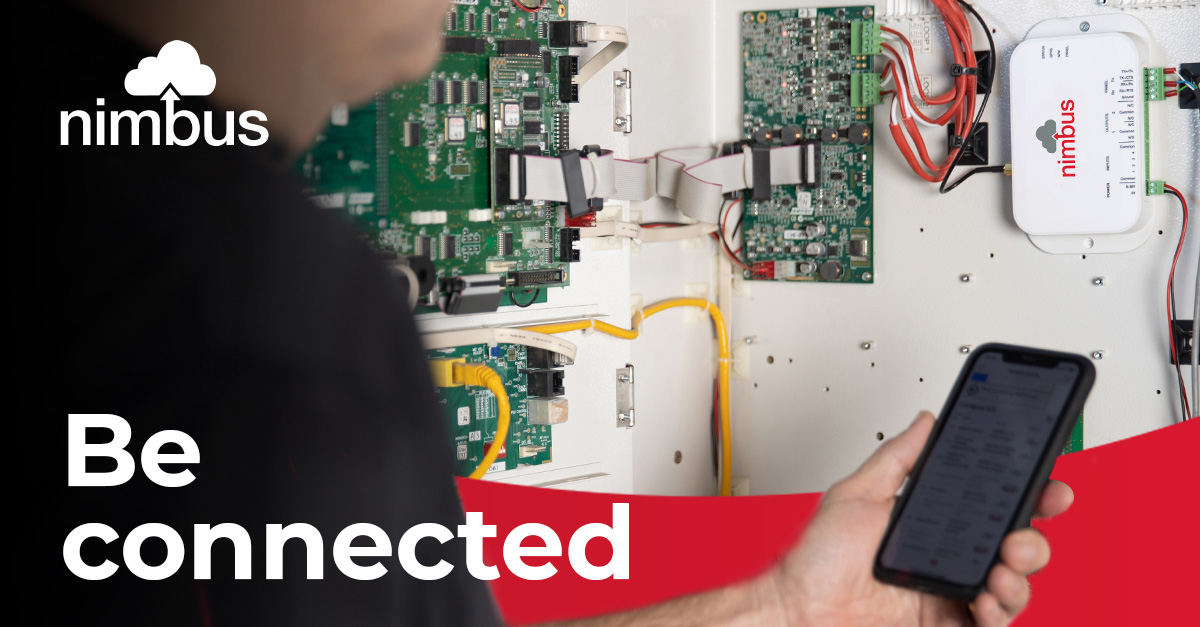
Nimbus, our multi-brand remote fire panel monitoring system, connects you to all your fire panels anywhere, anytime.